By Denis Sheehan, Publisher, H&C News
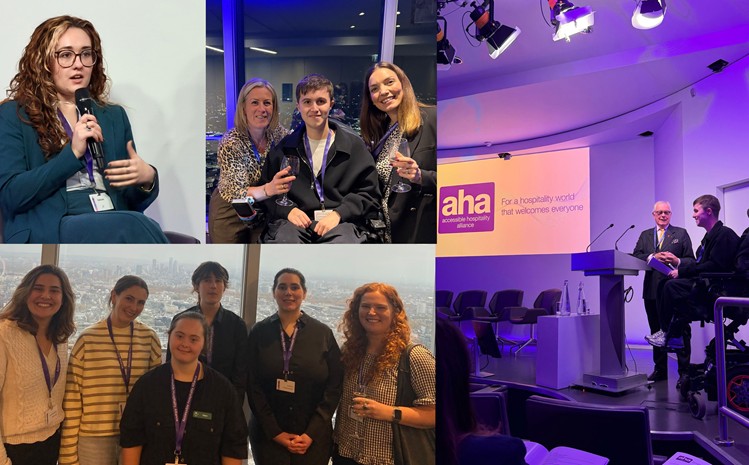
Accessible Hospitality Alliance (aha) returned to London on 11 November for its fifth forum in less than 18 months, bringing together lived experience, commercial insight and scientific research. Held in Partnership with Thomas Franks at the BT Tower, one of London’s most recognisable landmarks, the gathering offered a fresh perspective on an industry increasingly willing to question established assumptions.
From the opening discussions to the closing keynote, a common thread ran through the latest forum. A willingness to see familiar challenges differently, recognise opportunities previously overlooked, and work together to bring about change.
This was particularly evident in the contributions of two young people, George Shippey and Amy Till, whose perspectives demonstrated the value of bringing fresh thinking and different experiences into conversations about the industry’s future.
George, 18, lives with Duchenne muscular dystrophy and uses a powered wheelchair. His presentation, The Value of Accessible Loyalty explored something fundamental to hospitality, the relationship between confidence, customer experience and repeat business.
Drawing on his experiences of travelling, staying in hotels and playing competitive powerchair football, George described the difference between accommodation advertised as accessible and accommodation that genuinely meets his needs.
For George, loyalty begins with knowing what to expect. Accurate information, straightforward booking arrangements, knowledgeable staff and facilities that work as promised, all contribute to the confidence that encourages him to return.
His passion for football provided a striking commercial illustration. George estimates that his own football commitments generate 46 hotel room-nights annually when accounting for his accompanying carer. Applying similar assumptions across teams in the National Premiership and Championship, he demonstrated how accessible accommodation could attract over seven thousand room-nights through one sporting community alone.
The figures were illustrative, but the underlying message was unmistakable. An accessible hotel room can be the beginning of a much wider commercial relationship, involving players, carers, families, friends and entire organisations.
The same principle extends throughout hospitality. When accessibility works, people return, recommend and bring others with them.
Another young voice, Amy Till, Senior Diversity and Inclusion Manager at Thomas Franks, captured something equally important about the value of bringing people together.
Reflecting after the forum on LinkedIn, Amy wrote: “Today was a brilliant reminder that we are all occupying a small place in the world and yet, when we come together as individuals and as organisations, we can drive impactful change.”
It was a thoughtful observation that reflected much of what unfolded throughout the day.
Among the many perspectives represented were those of people with lived experience of disability, operators, employers, investors, accessibility specialists and organisations already working to remove barriers to participation.
Their different experiences increasingly intersect around a shared purpose.
For Martin Davis, Senior Director, Hotel + Leisure, Graham + Sibbald, accessibility is an increasingly compelling investment proposition.
Martin has been making the case that accessibility deserves consideration alongside the established drivers of hospitality investment: asset performance, customer satisfaction, occupancy, revenue and long-term returns.
His message carries particular significance coming from the hotel property and investment sector. Accessibility is gaining legitimacy as an investment strategy, increasingly examined through the same commercial disciplines applied to other investments intended to strengthen a business.
The implications extend beyond individual hotels. As investors and operators recognise the potential returns from more accessible environments, opportunities emerge across refurbishment, design, development, employment and the wider guest experience.
That commercial perspective complemented George’s account of accessible loyalty. One described the opportunity through the experience of a customer, the other examined its significance for those making investment decisions.
Different perspectives, arriving at a remarkably similar conclusion.
Throughout the forum, eight roundtable discussions examined how accessibility can become more deeply embedded in everyday hospitality operations. Their subjects ranged from employment and organisational culture to technology, commercial investment, inclusive communities and the practical challenges encountered by operators.
The exchanges drew upon the collective experience of people who understand different parts of the same challenge. Knowledge gained in one organisation could inform decisions in another, while lived experience frequently brought clarity to issues that conventional operating assumptions might overlook.
This collaborative approach has become an increasingly important feature of aha’s development.
Its first forum took place in June 2025. Seventeen months later, four forums have been delivered in London and a fifth in Malta, with each gathering bringing new relationships, perspectives and opportunities for collaboration.
The establishment of Access Champions within member organisations, followed by the creation of the Access Champions Collective, has provided a means for that shared experience to continue influencing decisions long after individual forums conclude.
The emphasis is increasingly on what people and organisations can accomplish together, drawing on their different capabilities and applying what they learn.
For another young participant at the forum, Layla Emberton of AccessibleUK, the significance of the November gathering was apparent in the conversations that followed.
Writing on LinkedIn, Layla shared an observation made by AccessibleUK’s Director on the journey home: “It felt like a ‘turning point’ for Accessible Tourism in the UK”.
It is an interesting reflection on how quickly expectations can change when people encounter different ways of thinking and discover others who share their determination to make progress.
The day’s final perspective came from a field in which risk, precision and human capability are examined with extraordinary rigour.

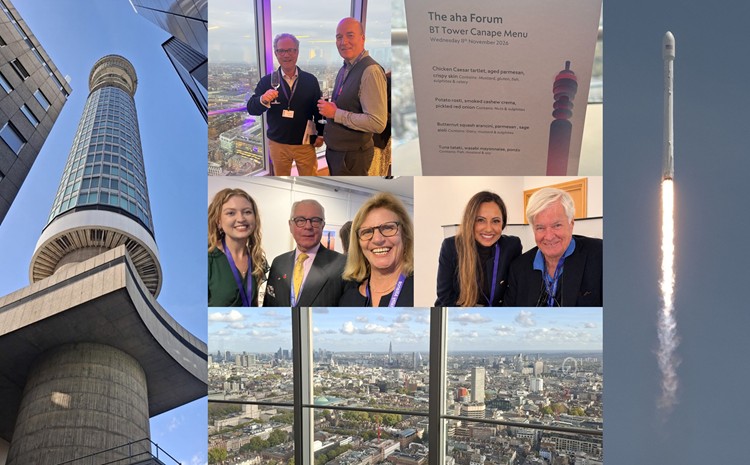
Dr Irene Di Giulio, biomedical engineer and Senior Lecturer at King’s College London, concluded the forum by exploring her work with the European Space Agency and the pioneering research helping to make spaceflight possible for astronauts with physical disabilities.
Her presentation, What Can Disability Teach Us About Human Performance? introduced an extraordinary proposition.
The space industry, among the most risk-conscious and technically demanding industries on Earth, is actively investigating how people with physical disabilities can participate in missions beyond our planet.
Former Paralympian and ESA astronaut John McFall has already been medically cleared for long-duration spaceflight. Plans are being explored for his participation in a mission to Haven-1, the proposed commercial space station being developed by Vast.
The significance reaches far beyond the prospect of a disabled astronaut travelling into orbit.
Rather than accepting long-established assumptions about the physical characteristics required of an astronaut, researchers are examining what the environment actually demands and whether different physical capabilities might offer unexpected advantages.
In the weightlessness of space, familiar ideas about mobility and physical ability can take on an entirely different meaning.
For an industry such as hospitality, the implications are profound.
If one of the world’s most exacting industries is prepared to reconsider established assumptions about human capability, what might hospitality achieve by applying similar curiosity and rigour to its own practices?
The presentation brought the forum’s recurring themes of perspective, ambition and action into sharp focus.
It was also a fitting conclusion to a day at the BT Tower, a landmark whose construction and history embody the willingness to attempt what once seemed beyond reach.
As the formal programme concluded, attendees ascended to the Tower’s 34th floor, looking out across a London skyline shaped by generations of ambition, invention and change.
The conversations continued against that extraordinary backdrop.
There was something appropriate about ending the day looking out over a familiar city from an unfamiliar vantage point.
Hospitality itself is facing a future in which demographic change, technological development and evolving customer expectations will require businesses to reconsider familiar approaches. The capacity to adapt, to collaborate and to act with courage will become increasingly valuable.
The contributions at BT Tower demonstrated how much can be learned when different generations, disciplines, businesses and experiences come together.
They also revealed the growing possibilities when that understanding begins to influence practical decisions.
Seventeen months on from the first aha Forum, the conversations are travelling further, reaching new organisations and finding expression in collaborative action.
And perhaps that is where the most meaningful change begins, with the willingness to see something differently, and the determination to do something about it.